

You’re right, the biggest gain is when we can afford to make more ambitious artistic decisions instead of drowning in repetitive clicks. All that “huge amount of stuff you have to do for the engine” is a bit of an illusion – in reality there are few steps, they’re just tedious when done by hand. In practice, purely in the context of asset export, it comes down to a few constant things: freezing transforms, applying modifiers, sorting out scale / pivot, naming and the export itself. Once you squeeze this into a single button, the technical part almost stops existing.
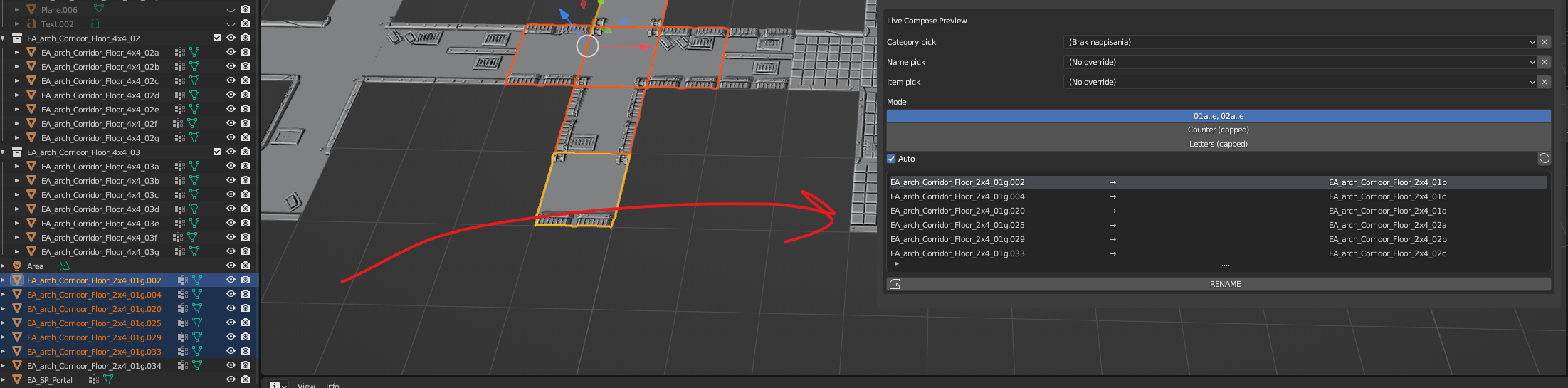
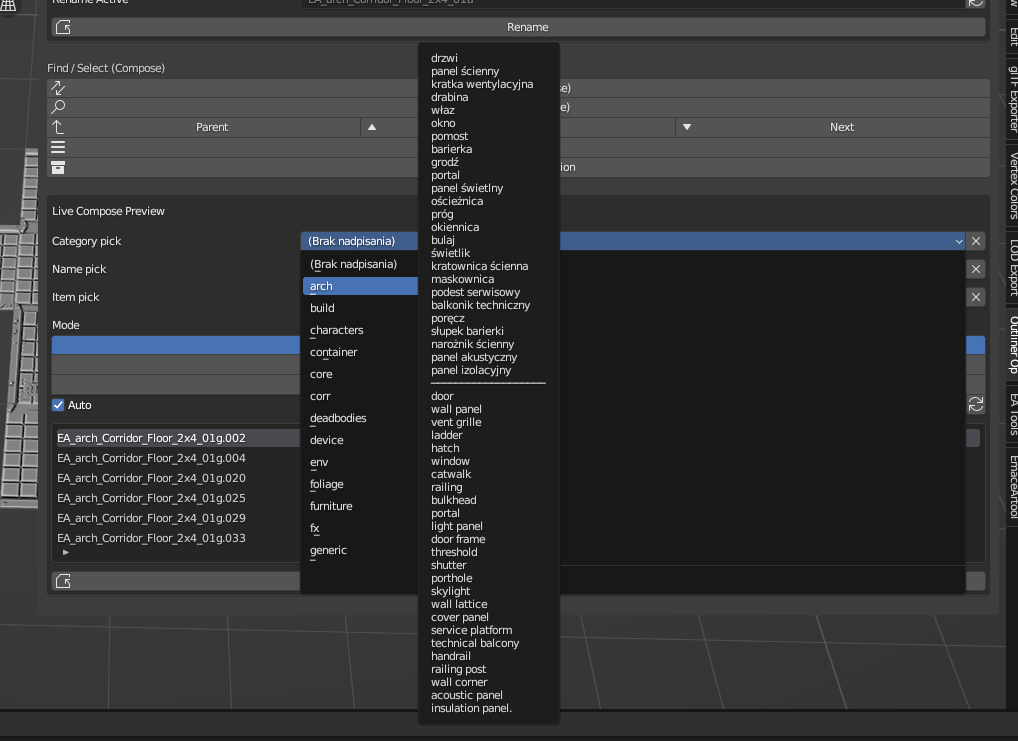
It’s good that we can wrap all of this into a single “send” click ;) The real nightmare that remained was naming models! But even that is handled by an Outliner add-on I wrote with some AI help – it searches the scene for all objects that share the same name core, which tend to appear accidentally during fast work, and lets you batch-fix / unify the names so the prefab, LOD and the rest talk to each other the way they should. On top of that, with a simple picker I can immediately assign a category (e.g. object type), which gets appended to name and item, so the whole pack stays organised without manually clicking through hundreds of objects. I’m attaching a screenshot that shows it, and in the near future I want to describe it properly on my blog.
All this automation is there so we can spend about 98% of the time on the art side. I’d rather make, say, 40–50 hero objects and around 200–300 medium and small objects for scene dressing than 500 hero objects only. You can’t build a nice environment out of heroes alone; with the technical pipeline automated you can design all the missing bits that make the scene feel alive with detail.
On the Unity side we’ve got a tool we built together (EmaceArTool) that automates the second half of the job: it creates prefabs, generates LODs and has this little “hygiene inspector” that checks the last ~50 used assets to see if they have LODs and colliders. If something is missing, you can add collisions to any number of prefabs with a single click, even attach LODs, all without opening them one by one. Thanks to that, the boring technical part is handled by the computer, and we can pour our time into a massive, dense asset pack and into how everything looks in the frame