
On Sale: GamesAssetsToolsTabletopComics
Indie game storeFree gamesFun gamesHorror games
Game developmentAssetsComics
SalesBundles
Jobs
TagsGame Engines

EmaceArt

66
Posts
12
Topics
120
Followers
28
Following
A member registered Sep 10, 2018 · View creator page →

Creator of
Recent community posts

Thank you! Glad you like them. I already have a big update planned for this pack, focused on guiding the player along the world's paths in a more cohesive way - with a comprehensive set of pieces and clear landmarks. This is the first of several key updates I’m planning for the near future. I’ll post an update on the page as soon as it’s ready.

Klimatyczny tytuł :)

I’m a level/environment artist working in Unity, and I keep hitting the same wall: the more the world grows, the more time disappears into “technical housekeeping” instead of composition, set dressing, and art decisions.


Which engine do you work in (Unity / Unreal / Godot / custom / other), and at what scale (small scenes vs open world)?

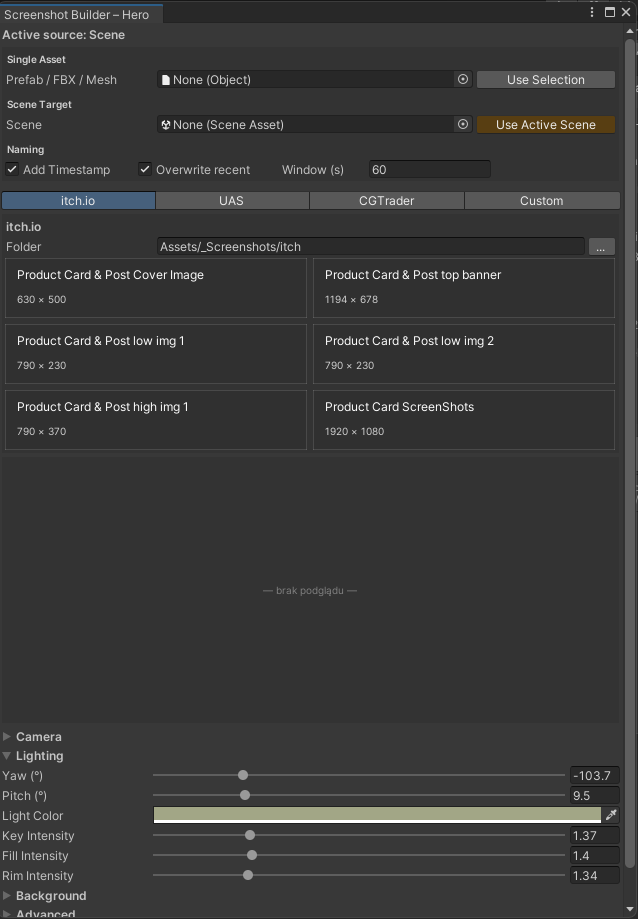
So I started building small internal tools to reduce friction and keep projects navigable when scenes/packs get large. I’ll drop screenshots in the thread (easier than a wall of text), but here’s the current tool backlog in one breath:
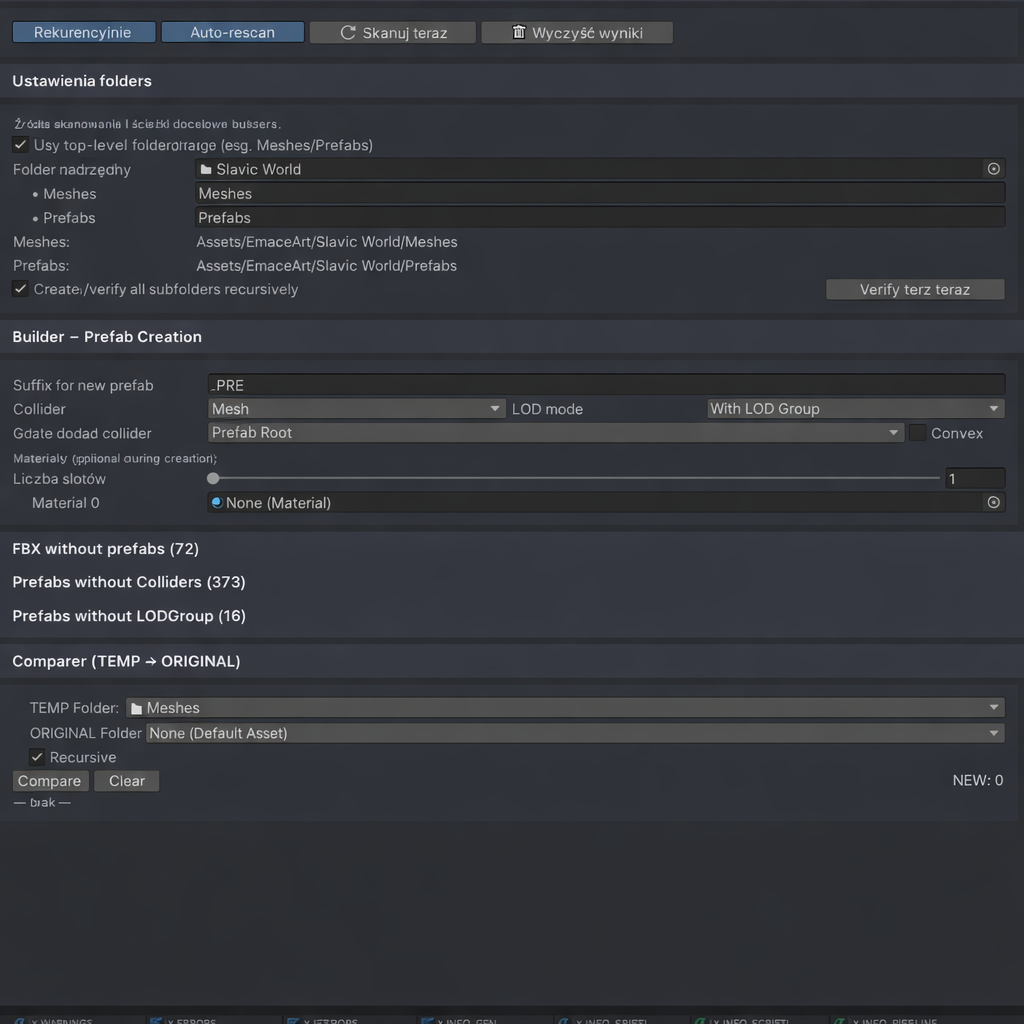


Prefab Researcher — fast prefab search/browsing so I’m not spelunking folders for half my life.
Prefab Builder — batch prefab creation with consistent rules (folders/naming/colliders/LOD handling).
LOD Generator / LOD Fixer — creates or repairs LODGroup structures and naming consistency.
Hierarchy / Project Organizer — bulk sorting/cleanup to keep large packs/scenes readable.

Now the part I actually care about: your workflow and pain points.
If you’re a level/environment artist, can you share one short reply with:

  • 1 How you structure hierarchy / scene organization (your “default pattern”),
    2 The #1 thing that kills your flow (the frustration that keeps coming back),
    3 Any tools/patterns you rely on (built-in, marketplace, your own scripts, anything).


    I’m collecting real-world approaches from artists (not theory) to see what’s common across pipelines—and what’s worth tooling up next.

  • I’d also love to collect feedback on my Discord — that’s where I mostly discuss this stuff and where we’re building these level artist tools/assets together. https://discord.gg/q57hjZCB

    It makes me really happy to read that, thanks a lot for the comment! I like releasing free packs so more people can calmly test the style and play with them in their prototypes. This particular pack should get two more larger updates this month - some new pieces and overall polish - all as free updates. At the same time these releases help me gather honest feedback: what people enjoy, what they miss, and what the current needs and trends are in the dev scene, so I can plan future projects more thoughtfully.

    The atmosphere feels really unique, I rarely see assets in this kind of style. I’m really curious how you achieved the cel shading with those thick outlines - is it driven by the texture/material (like hand-painted edges), or is it some custom shader trick?

    Thx!

    Thanks!!

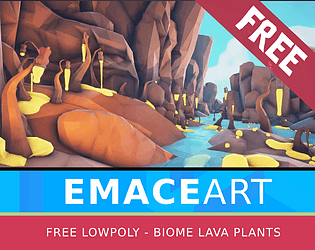
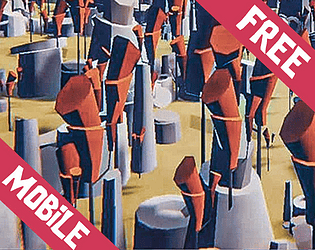
    A fresh pack of stylized, low poly alien flora with a volcanic vibe – perfect for lava caves, toxic lakes, crater zones, or magical biomes.

    Bold shapes and glowing contrasts make these plants stand out even at a distance, making them ideal for level decoration, visual guidance, and atmosphere building.
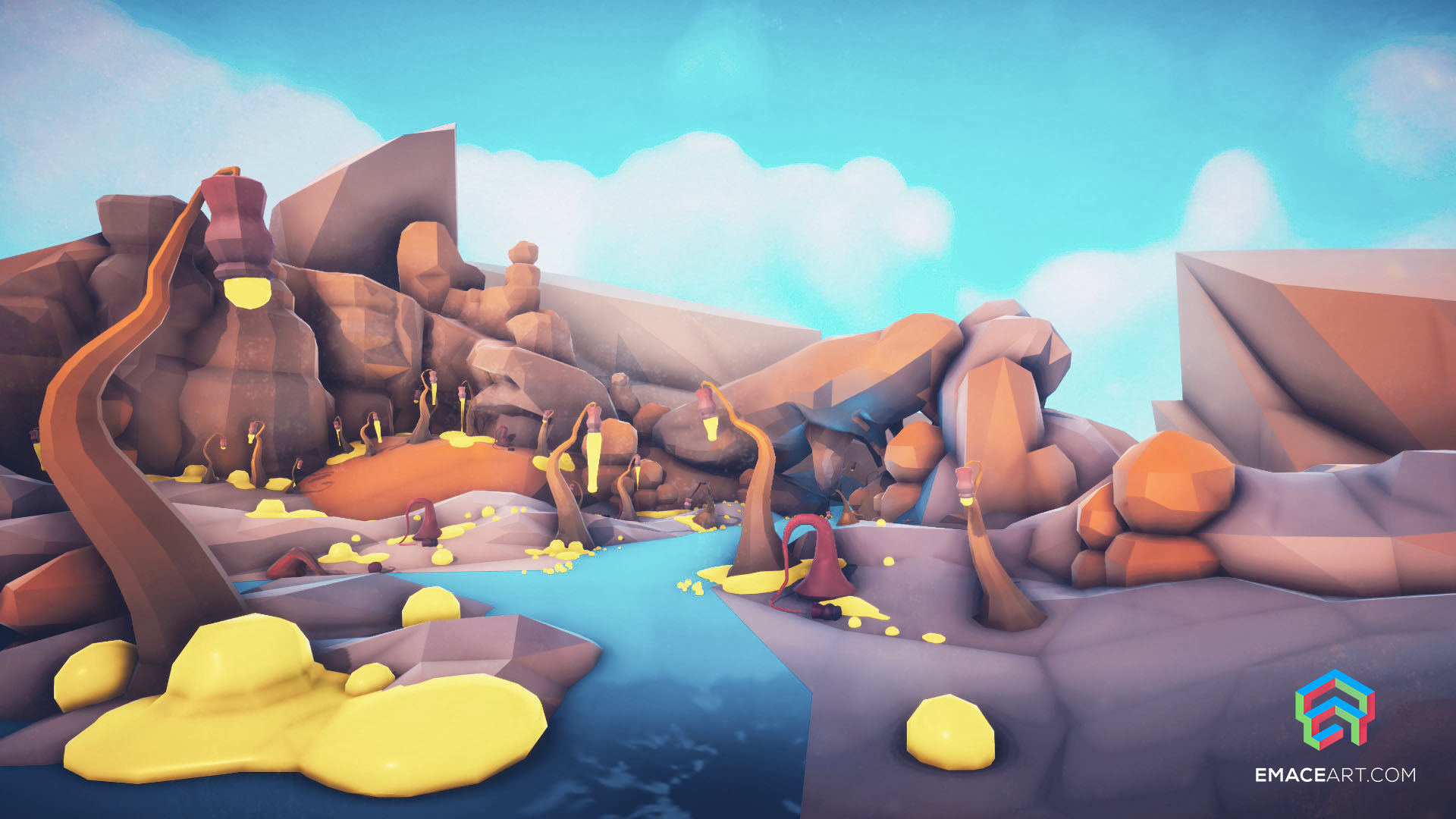
    What’s Inside:

    • 22 models (FBX, glTF + Unity prefabs)

    • Lightweight geometry (~6k tris / 5k polys / 3k verts)

    • Single texture setup (easy recoloring) + 3 materials: base, water, lava emission

    • LODs 1–3 for distance optimization and stable FPS

    • Unity Demo scene with post-processing profile – just drop in and go

    • Blender Demo scene

      👉 Get it here

    Perfect for:

    Lava levels, alien caves, volcanic worlds, sci-fi or fantasy environments — basically anywhere you need a punch of stylized atmosphere without sacrificing performance.

    This is such a smart take on PSX style - instead of generic rocks and crates you went straight for a very specific narrative space. The amount of destroyed variants is perfect for storytelling: you can build a calm campsite, then gradually push it into horror just by swapping meshes and textures. As someone who also builds environment kits, I really like how each asset belongs to a clear category (sleeping, shelter, fire), which makes it easier to design gameplay beats around them. If you ever expand this, a handful of larger structural pieces - broken cabins, twisted trees, maybe a partially collapsed parking area - would give level designers a few strong anchors to compose around.

    Love how focused this pack is on functional chunks instead of random sci-fi clutter. Buildings, paths, domes, defenses - it’s basically a ready-made kit for blocking out a small base and then pushing it straight to production.

    Your swamp scene has a really solid sense of depth - the way the silhouettes of the trees layer into the fog makes it feel like a playable space, not just a beauty shot. great portfolio piece and super inspiring for people building stylised environments in Unity/UE.

    Really nice building block, that staggered roof instantly feels like a slice of a real Tokyo street. I also like how you keep everything in a calm grey value range, so the windows and railings read clearly and don’t fight with the roof tiles. If you make more variants, a bit of rhythm-breaking - different curtains in a few windows, AC units, a shop sign or some laundry on a balcony - can do a great job hiding the modular repetition in game.

    The story you describe in the post is almost a one-to-one with mine - I also spent years doing client work and a “normal” job, building environments on the side. For the last five years I’ve been saving up and preparing so I can finally try to chase the same dream: becoming a full-time asset publisher and making a living by helping other devs build their worlds. 

    Your video does a great job showing how much the same forest changes character between presets - from a calm night, through full “Silent Hill vibes”, all the way to dirty, unsettling horror. It really feels like an actual level, not just a bundle of trees; the lighting and forest density clearly guide the player. I really respect that you included a full Unreal project and that you’re using this as a way to reconnect with your own ideas. For someone like me, who’s just about to try the same path, it’s super motivating - good luck with the next packs, I’ll be following along.

    Nice update - just adding a proper demo scene can make a huge difference for people who grab a pack “last minute” for game jams.

    Hey folks,
    I’ve just turned my “Polyvania” 3D asset pack from paid to 100% free on itch.io – with no content cut out. It’s exactly the same full version previous paid users got.
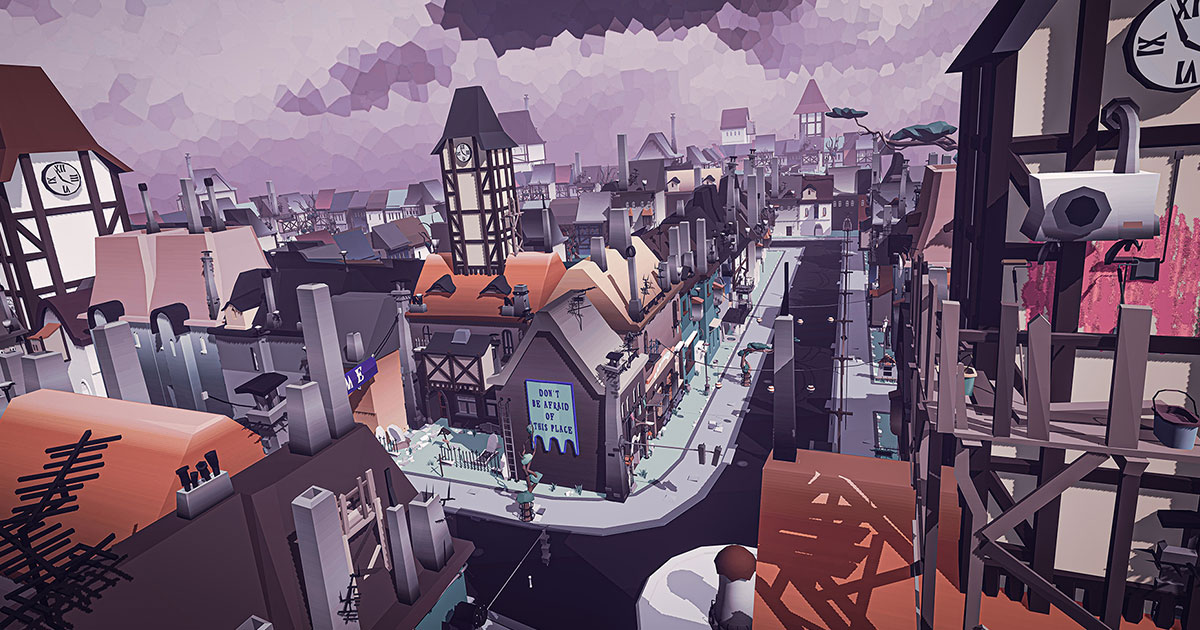

    It’s a stylized low/mid-poly pack for vampiric, cartoonish town environments, inspired by the vibe of Hotel Transylvania. Inside you’ll find for example:

    • modular streets, sidewalks and small plazas,

    • lots of house variants to quickly build whole districts,

    • props and details for an immersive, slightly absurd vampire atmosphere (easter eggs, quirky references, exaggerated shapes),

    • ready-made scenes and modular level chunks so you can move from blockout to a playable level much faster.

    Page link:
    ITCH: https://emaceart.itch.io/polyvania
    AssetStore: FREE LowPoly Town Massive Cartoon Pack - Vampiric PolyVania | 3D Urban | Unity Asset Store

    You’re welcome to use it in:

    • commercial and non-commercial games,

    • game jams,

    • prototypes, trailers, devlogs and screenshots.

    The only thing I ask is please don’t re-upload the raw assets as your own pack.
    If you end up using Polyvania in a project, I’d love to see screenshots or short gameplay clips. 🙂

    that mindset of “making things I’d like to use myself” is really good, and usually pays off in the long run. 😊 This pack already feels like something you can build a full scene with, and that’s a huge step up from just having a bag of loose props.

    As someone who also sells stylised asset packs, I really enjoy looking at this kind of work – you can feel that the tavern is meant as a complete “scene machine”, not just a bag of cool standalone props. I like how much attention you give to pivots and modular walls, because that’s exactly where a lot of first packs fall apart: everything looks nice on renders, but in an actual scene nothing wants to sit on the grid. 

    good luck ;)

    Really pleasant and cohesive set – love how you get such a cozy feel out of a few simple shapes.  The lamps and bench give a nice sense of scale so the whole floating tile feels like a ready-made chunk of level for dioramas

    Wow, awesome robots! 😍 I have a real soft spot for this kind of low-poly style – I’ve made two larger environment packs in a similar vibe, under the name FREE Epic Mobile. They’re just begging to be combined with your characters. That Epic Mobile pack is free on my profile, so if you ever look for an environment where a robot like this could feel at home, feel free to check my page – I’ve posted a few scenes there that could fit them nicely.

    Nice question – I’m also a 3D asset creator, mainly environments, and I constantly ask devs the same thing.
    From what I see, the assets that get used the most are not the “coolest” ones, but the boring, modular building blocks that let you actually build levels:
    Environment kits: walls, floors, stairs, railings, fences, doors, windows, roofs.
    Set dressing props in small / medium / large groups: crates, boxes, barrels, furniture, cables, debris – designed so they can be clustered into readable shapes instead of random noise.
    Utility / gameplay objects: switches, gates, terminals, loot containers, signposts – anything devs can hook up to their scripts.

    Weapons are fun, but that market is very crowded.

    (2 edits)

    You’re right, the biggest gain is when we can afford to make more ambitious artistic decisions instead of drowning in repetitive clicks. All that “huge amount of stuff you have to do for the engine” is a bit of an illusion – in reality there are few steps, they’re just tedious when done by hand. In practice, purely in the context of asset export, it comes down to a few constant things: freezing transforms, applying modifiers, sorting out scale / pivot, naming and the export itself. Once you squeeze this into a single button, the technical part almost stops existing.
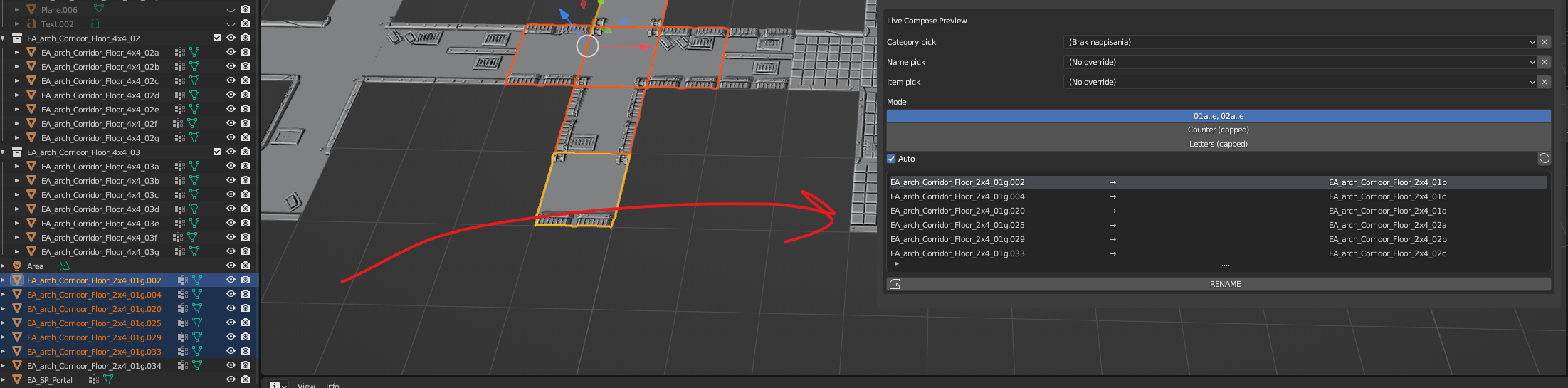

    It’s good that we can wrap all of this into a single “send” click ;) The real nightmare that remained was naming models! But even that is handled by an Outliner add-on I wrote with some AI help – it searches the scene for all objects that share the same name core, which tend to appear accidentally during fast work, and lets you batch-fix / unify the names so the prefab, LOD and the rest talk to each other the way they should. On top of that, with a simple picker I can immediately assign a category (e.g. object type), which gets appended to name and item, so the whole pack stays organised without manually clicking through hundreds of objects. I’m attaching a screenshot that shows it, and in the near future I want to describe it properly on my blog.

    All this automation is there so we can spend about 98% of the time on the art side. I’d rather make, say, 40–50 hero objects and around 200–300 medium and small objects for scene dressing than 500 hero objects only. You can’t build a nice environment out of heroes alone; with the technical pipeline automated you can design all the missing bits that make the scene feel alive with detail.
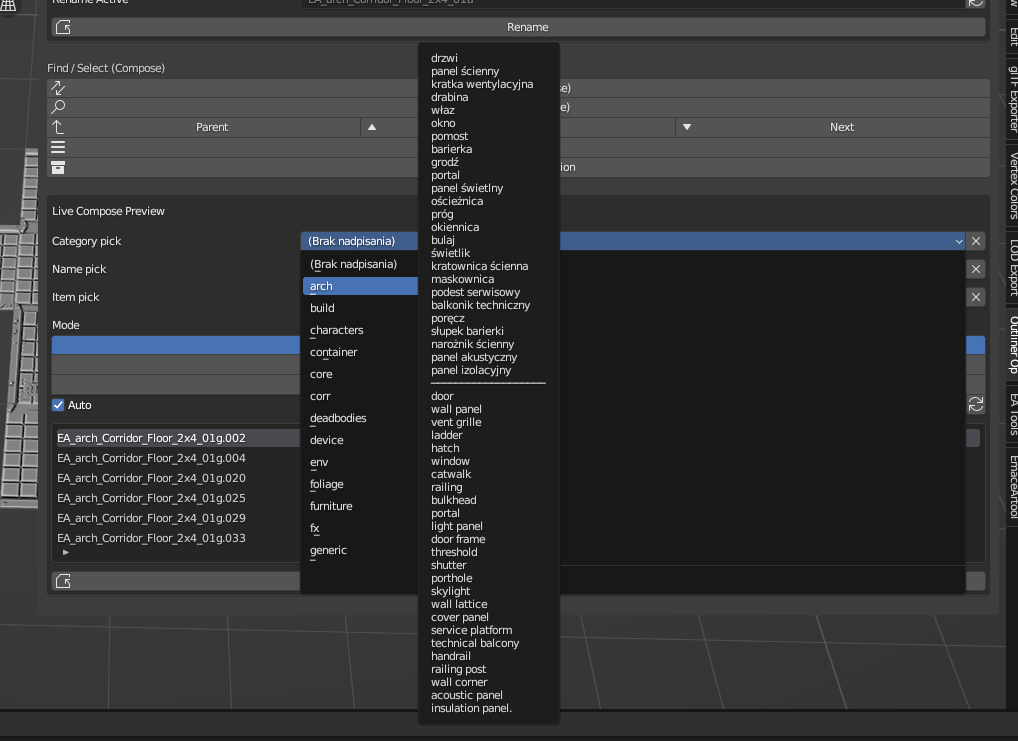

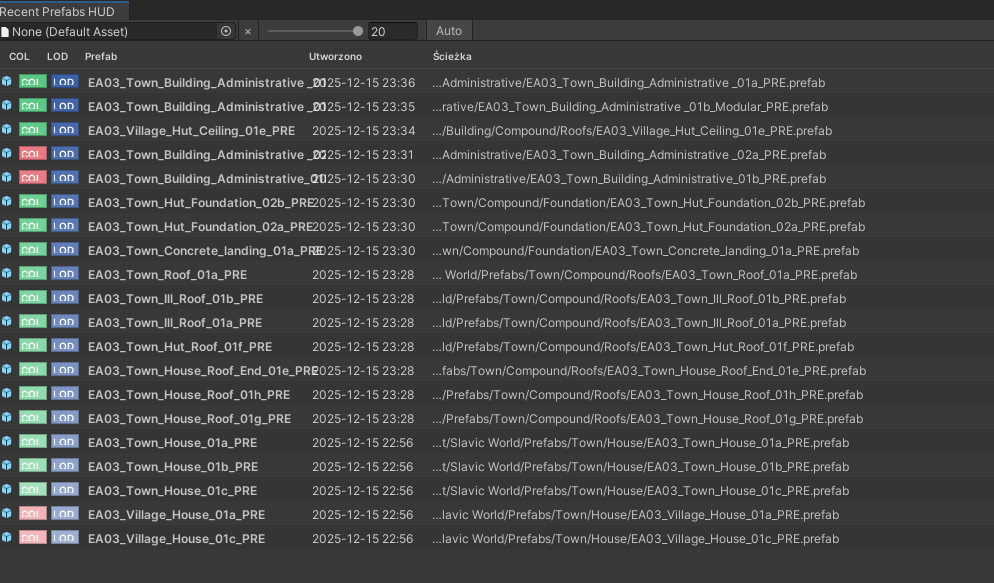
    On the Unity side we’ve got a tool we built together (EmaceArTool) that automates the second half of the job: it creates prefabs, generates LODs and has this little “hygiene inspector” that checks the last ~50 used assets to see if they have LODs and colliders. If something is missing, you can add collisions to any number of prefabs with a single click, even attach LODs, all without opening them one by one. Thanks to that, the boring technical part is handled by the computer, and we can pour our time into a massive, dense asset pack and into how everything looks in the frame

    That bit about batch exporting 60+ trees and bushes grabbed me right away – this kind of pipeline thinking is exactly what most small teams are missing. I used FBX Bundle for a long time in the past, mainly for Unity/Unreal/Godot export profiles, batch export of selected objects, freezing transforms, and especially snapping the pivot to the ground, plus LOD support. Once LODs effectively broke for me after the 2.6 era (which is the most important part in my workflow), I stopped using it and, with a bit of help from AI, built my own export add-on that copies only the bits I care about as a level artist and works cleanly in newer Blender versions.

    The Blender Super Batch Export you linked was completely new to me – I checked the docs and I’m honestly surprised how much it covers (multi-format, per-object/collection export, scene presets, transform options, etc.). A few of those ideas are really tempting to steal for my own exporter. For me it’s a good reminder that there’s no single “holy” tool – it’s worth experimenting with different add-ons or even small custom scripts, depending on whether your profile is more technical artist, level artist or, say, character artist.

     For office interiors it’s so easy to fall into a “copy-paste grid”, but with separate parts and that tiny color palette you can build a lot of variations just by recombining pieces and rotating them a bit.

    For beginners this is gold: you can study how the scene is built, how materials are organised, then remix the meshes into your own compositions. 

    As an environment artist this feels like a really solid “toolkit” pack, not just a bunch of random props. The consistent low-poly style and single GLB delivery is super nice for keeping clean pipeline between Blender → Unity/Unreal, especially when you just want to block out a level fast.

    Love how you stick to that tiny 12×12 palette – the whole café feels super coherent and it really helps to keep one clear focus in the scene. The modular furniture kit is perfect for building a clean grid layout (wall – window – counter – cake island) that still reads well from player camera.

    If you ever update the pack, I’d add 2–3 slightly exaggerated hero props (like an over-the-top coffee machine or a front neon sign) so people can build a strong marketing shot right away. Once I drop your set into a test scene in Unity I can share some screenshots and notes on how it behaves in a more cluttered level.

    Hey, very nice free tree set 😊
    Simple, clear shapes – great for people who are learning how to make games. As someone who collects and recommends free assets, I see this as a good base for learning how to build a forest and test gameplay.
    If you ever update it, a few variants – taller / shorter trees and some slightly bent trunks – would help make the forest more varied and interesting. Fingers crossed for more packs in this style.

    Hi, thanks for reaching out and sharing your project. At the moment I’m not able to take on any voluntary / rev-share positions and need to stay focused on my own commercial environment / level art work, so I can’t join the team. If you ever want quick feedback on level art, blockouts or environment composition, feel free to DM me https://discord.gg/bVwYYuAY and I’ll try to help when I can – good luck with the demo and the search for a publisher!

    Hi, thanks a lot for reaching out and for the detailed messages. Right now I’m not looking to join any unpaid / voluntary or rev-share positions – I’m focusing my limited time on my own commercial work and asset pipelines, so I wouldn’t be able to commit to a production in a responsible way. That said, if you ever need feedback on level art / environments - feel free to DM me here on itch.io. I’m happy to answer specific questions, take a look at a couple of screenshots and share some concrete pointers when I can. I wish you the best of luck with your projects and I hope you find the right artist to grow your worlds.


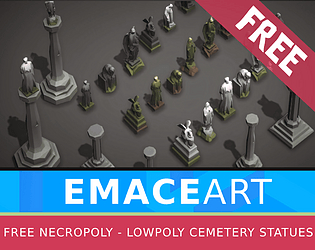
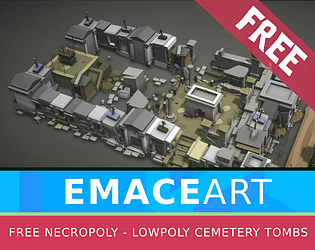
    Hey! I’ve just posted a blog entry on itch.io about how I approach low poly so it doesn’t stop at 5-minute placeholders, but ends up as assets that can live comfortably inside bigger indie projects. Using my cemetery project Necropoly as an example, I talk about: 

    • a 4-stage pipeline: from simple shapes, through an “optimal model”, shape stylization, up to surface details,

    • the difference between “Tiny” low poly for mobile and more complex models for PC/console – and when it makes sense to stop earlier,

    • how to pack a scene densely (atlas, simple materials, LOD) without murdering performance,

    • why a stylized low poly look can age better than realism chasing “3D photography”.

    If you’re playing with low poly or planning to, feel free to check it out:
    👉 https://itch.freezing.top/blog/1127405/blog-implementing-low-poly-style-in-game-dev


    I’d love to hear your own tricks for shape language, scene density and optimization in the comments – there’s always room to bend this style a bit more towards your own game.

    Hey! When you import the pack and see only a grey color, that usually means the materials/textures are not hooked up yet. Which software are you importing into – Unity, Godot, Roblox Studio, or Blender? Each of them handles materials a bit differently, so I can give you a specific step-by-step fix once I know. Grey boxes are great for prototyping, but these assets are meant to be a bit prettier than that :)

    Hi!
    I’m a level artist / 3D environment artist looking to join a small team working on an indie game with the goal of building a coherent small universe (not just disconnected levels).

    Who I am

    • Level artist & 3D modeler focused on environments, modular kits and world-building

    • Main engine: Unity (URP/HDRP), but I’m also open to working in Roblox or Godot if that’s where your project lives

    • Strong experience with stylized / low-poly / mid-poly worlds

    • Worked as world/level artist on “Survival Machine”, a 4-year production released on Steam

    Portfolio (ArtStation):
    👉 ArtStation - EmacEArt !

    Previous work – Survival Machine (level art / world building):
    👉 Survival Machine na Steam

    What I can do for your project

    • Design, blockout and dress levels based on your game’s mechanics and narrative

    • Create modular environment assets (architecture, props, terrain pieces) ready for Unity (and adaptable to other engines when needed)

    • Build readable, gameplay-focused spaces with mood, lighting and composition in mind

    What I’m looking for

    • Small team (solo dev + a few people, or tiny studio)

    • Indie game with clear scope and a shared vision for a small but rich universe

    • PC/console/Steam/itch.io scope, not mobile hyper-casual

    If this sounds like a good fit, feel free to reply here or message me directly on itch.io.

    (1 edit)

    Hey everyone!


    I’m mostly an environment / level artist, not a programmer, so I’ll drop something on the “worldbuilding” side. I worked as a world creator on Survival Machine – a 4-player co-op survival adventure where you build your base on top of a giant moving Machine and ride it across a zombie-infested world, exploring colorful biomes by day and defending your fortress-on-wheels at night. Steam Store

    If you enjoy co-op base building, travelling fortresses and trying to keep your combat spaces readable while chaos happens all around, you can check it out here (there’s a demo on Steam):
    👉 https://store.steampowered.com/app/1601330/Survival_Machine/

    as a first small pack – it’s okay. If you add concrete technical info, clean up the filenames, drop in one in-game mockup and a clear license section, it’ll look much more professional and much easier to trust and use in a real production pipeline.

    I’d also add one image showing these potions inside an actual UI – e.g. an inventory screen or hotbar mockup. That immediately tells me “this is how it will look in your game”, not just “four bottles on white”. One small frame with a clear focus potion, others in the background and some negative space instead of everything glued together.


    The devlog is a good direction, but titles like “my creation of this pack of potions” don’t say much. I’d add 1–2 sentences about the process: what you improved, what changed after feedback, whether you plan variants (poisoned, legendary, empty flasks, etc.). That instantly gives the feeling the pack will evolve and may get updates.

    As someone who drops assets into bigger projects though, I’d need more specifics. Right now it’s missing:

    • resolution info (e.g. 256x256 / 512x512 px – dpi doesn’t matter, pixel size does),

    • background info (transparent? white background?),

    • a short, clear license section: can I use this in commercial games, jams, trailers, screenshots, etc.? At the moment there’s only the vague “use for game assets and in game only, no resale…”,

    • clean file naming. “cool potion - Copy (1).png” looks like it came straight from the Downloads folder – in a real project that becomes a mess fast. Better: potion_blue.png, potion_green.png, and so on.

    Hi! Devs and gamers!! 

    I’ve just published a longer blog post on my itch.io profile about Dead Trash and a very specific kind of “realism” in games – the grimy, VHS / bodycam kind rather than clean PBR/UE5 gloss.
    Blog link: https://itch.freezing.top/blog/1122565/dead-trash-a-bridge-between-amiga-photorealism-and-bodycam-realism
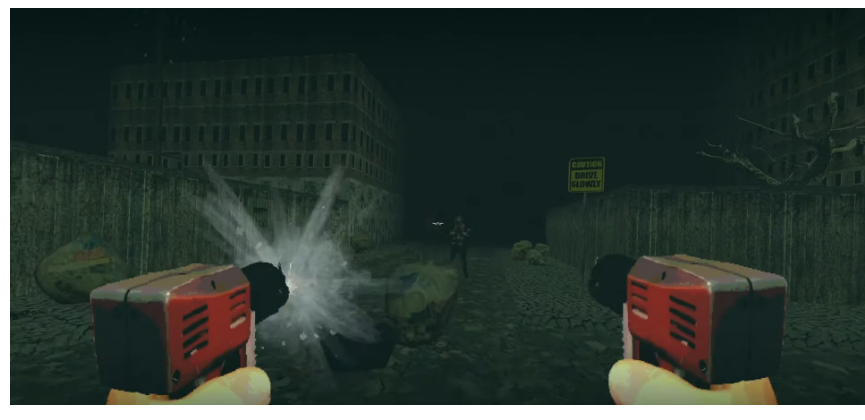
    Dead Trash

    In short, I compare Dead Trash to old Polish Amiga “photo-games” (Alfabet Śmierci, Prawo Krwi, Sen) and to small bodycam experiments from itch.io – and I argue that realism often comes more from recognisable spaces and sounds than from raw tech.

    At the end I ask whether modern bodycam horror (games like Bodycam, ILL and similar) is still “just a flat screen”, or already a kind of lobby to future VR lenses and brain chips.

    Do you, in your own projects

    • Do you deliberately use local, recognisable details (block architecture, stairwells, dumpsters, graffiti, specific sounds) to “fake” realism without going full photogrammetry?

    • Do you have favourite examples of games (on or outside itch.io) that really nail this kind of dirty, culturally specific realism?

    (1 edit)

    Instead of another “watch course X, then course Y” reply, here’s a slightly unusual story about how I learned Blender. My journey started with… tiny paper notebooks with plastic tabs. First I decided I wanted to do level art – not “anything 3D”, but a very specific role. Then I wrote down the typical problems a level artist has: modular modeling, clean pivots, instancing, Outliner hygiene, sensible naming, fast variant creation, scene dressing so a simple modular set suddenly feels like a full world. On top of that: knife tool, edge loops, mirroring, pivot point, snapping, fast rotate/scale – all from the keyboard, without diving into the UI.

    At some point I basically started to ignore the UI. My goal was to do as much as possible from the keyboard, almost without the mouse, so I could focus on the art and cut out repetitive, pointless movements. Add face orientation and flip normals to make sure my meshes don’t end up with holes in the engine – I was terrified of that, so that shortcut became the very first entry in my “Blender bible”. That’s how I hunted for shortcuts in Blender. Each one went into the right notebook tab: a short line “what happens when I press this”, plus a color and category. And something funny happened – writing it down once was enough. My brain took a snapshot, and I never really had to study those shortcuts. That’s how I ended up with 100+ shortcuts in my muscle memory without classic memorising.

    For the first years, YouTube tutorials were actually second priority. Notebook first, video second – more like a reference than life support. Over time this obsession with “small percentages” started to stack: an addon that gives +1% speed here, a tool that saves 10% clicking there, then a better naming system for models when exporting to an engine (suffixes, prefixes, category tags in the name). Up to 2023 I was testing tons of addons, sometimes hiring programmers to build custom ones, slowly shaping a workflow that compresses my movements in Blender as much as possible.

    Today, after ~10 years with Blender, I’m writing my own addons with the help of AI: four small “control panels” that bundle everything I need as a level artist – from modular grid and mass-variant creation to automatic project housekeeping (batch renaming, suffix/prefix schemes, grouping assets for the game engine). And honestly, 2025 felt more like a x2–x10 jump than a tiny tweak. Small improvements simply stacked into a much clearer, calmer workflow.

    If you’re just starting with Blender, my suggestion instead of “watch this course”:

    • first pick a role (environment / level art, prop art, hard surface, etc.),
    • write down the real problems that role has to solve day-to-day,
    • find shortcuts and tools only for those problems and write them down by hand (analogue notes work surprisingly well),
    • then layer tutorials on top of that.

    If this sounds interesting, reply here – I can share how I structured those notebooks, or what exactly I packed into my level-art / modular-modeling addons. Happy to tune the advice to your role instead of giving generic Blender tips.


    emaceart.itch.io   <--- My itch page.

    Hi Walter! I’m really glad you asked about the textures and that Swampia caught your eye. I’ve attached the texture set used in the materials as an additional file on the project page. Thanks for checking it out!

    That part about keeping the process “smooth and consistent” got my attention – it sounds like working with assets, for you, is closer to editing than sculpting. It’s an interesting choice, because it shifts the focus from pure modelling to how the scene is put together: what rhythm it has, where it gets dense, and where you leave intentional gaps instead of adding more “pretty” models.

    I get the sense that handling a mix of store-bought assets and custom models without obvious stylistic seams is, in practice, harder than building everything from scratch. That’s the moment when the mix stops being a compromise and starts reading as an authorial decision – instead of adapting to the assets, you assign them their own hierarchy and role in the frame. The player doesn’t have to name it, but they immediately feel the difference between a scene that’s been designed and one that’s just been assembled from pieces.

    I like this kind of approach, where the “simplicity” of the pipeline doesn’t pretend to be modesty, but is there to keep the space readable and give it its own accent.

    Thanks for the detailed reply and for mentioning you prefer “just models” without built-in logic / Blueprints – that’s exactly how I like to structure my packs: clean modular meshes, a few example prefabs, no forced gameplay systems so they’re easy to plug into your own logic.

    I’m more of an environment / level artist than an “everything” generalist, so I aim for complete environment sets (architecture, interiors, props, foliage, a consistent style language). I’d rather push quality in one area than spread it thin across weapons or characters.

    I’m also seriously thinking about going deeper into Unreal – next year I want to build a tool for migrating whole Unity projects to Unreal without having to redo everything by hand. If that works out, I’m planning to drop several big packs on that engine as well.